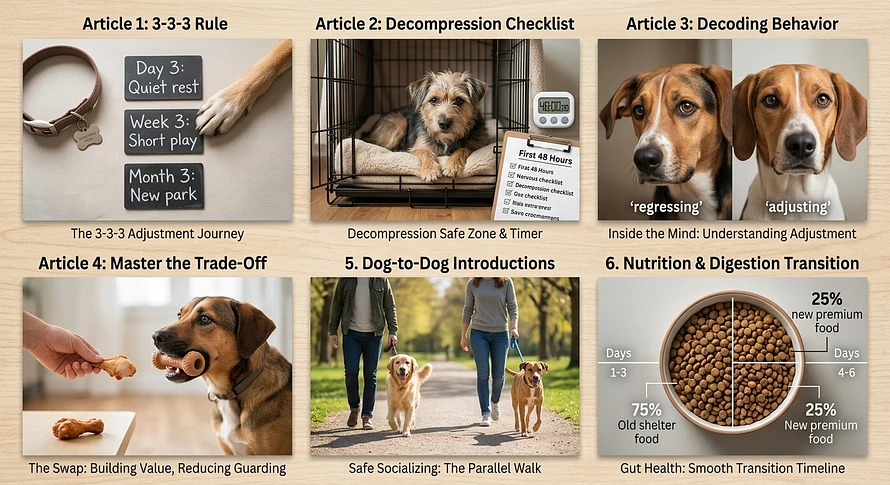
When adopting a rescue, the natural impulse is to shower them with love, toys, and introductions. However, over-stimulation is the leading cause of early behavioral setbacks in newly adopted dogs.
What is Decompression?
Decompression is a deliberate period of low sensory input that allows a dog's cortisol levels to return to baseline. Shelter environments keep dogs in a perpetual state of "fight or flight"; transitioning straight into a bustling home can trigger fear-based aggression or extreme shutdown.
Rules for the Decompression Phase (Days 1–14)
-
Limit Physical Contact: Resist the urge to constantly hug or pet your dog. Let them approach you on their own terms.
-
No Visiting Guests: Pause all visits from friends, neighbors, and extended family for the first two weeks.
-
Structured Routine: Feed, walk, and sleep at the exact same times every day. Predictability breeds security.
-
Low-Volume Living: Keep voices soft and television volumes moderate. Avoid sudden loud noises near the dog.